Sign in. It’s quick, free and it’s up to you.
An account is an optional way to support the work we do. Find out more.
Sign in. It’s quick, free and it’s up to you.
An account is an optional way to support the work we do. Find out more.
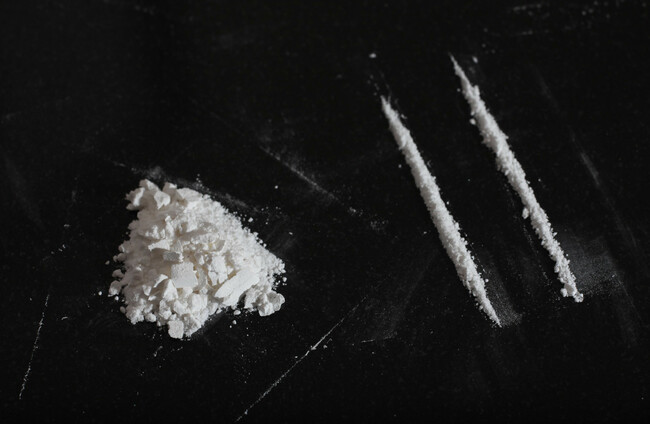
COCAINE USE IN Ireland hit the headlines once again this week, as a report from the Rutland Centre found that cocaine use accounted for 40% of addiction treatment cases in 2024 overall.
Most of the studies we rely on for information about cocaine use in Ireland look at the breakdown of addiction treatment cases – but in pubs and clubs across every city in Ireland, and in many towns, it’s become commonplace for women and men to be, as it’s usually phrased, ‘on the bag’.
Stats from the Health and Research Board showed that 7% of adults reported using cocaine in 2023, accounting for 301,000 people.
Many of these people don’t seek treatment, but cocaine has become a fixture of their nights out and a part of their lives.
The Journal chatted with four young working professionals about their personal cocaine use: a teacher, a civil servant, a financial services worker, and a medical device factory worker.
They all said that the drug has become normalised, even between colleagues at after-work events, but they had diverging views on how harmful it is – and conflicting feelings on their personal use.
Eilish was 17 years old and in a pub in the town where she grew up the first time she took coke; it wasn’t something she had planned to do that night.
“I was with some older friends, and they bought some coke from a random dealer in town. Instead of doing what people normally would – a line – we had no clue so we dumped the entire gram out and split it in three, and tried to take the entire thing. I don’t think I really understood the effects of it at the time, I just felt incredibly buzzed,” she said.
Eilish didn’t take coke regularly while she attended university in England, but she says that over the last five years as she’s lived in London working as a teacher, the substance has become a regular part of her out-of-work life.
“It’s become more of a like, ‘Right, let’s get the bag in’ kind of energy on nights out and at parties.
“I think maybe people were always more so doing it in their late twenties and thirties because at college, you can’t really afford it,” she said.
Eilish added that she got her dealer’s number from a friend, and all the dealer asked for was for her to send that friend’s number on, to verify that they were an existing client.
“I’ve been using the same guy for five years, he’s really sound. I know roughly how soon he’s going to show up, and if he gives me some stuff that’s been cut down [with other substances] and is weak, he’s actually refunded me on multiple occasions when I’ve told him about it; he’s open to feedback,” she said.
Eilish says that she doesn’t really worry about the health impacts of her cocaine use, but the financial strain is a concern.
“I get to the end of the month and I’m like ‘other than rent, where has my pay gone?’ and then I’m like, ‘oh, yeah’. Because even if you do it two to three nights in a month, and you have gone in on it with someone else, that’s like, £150 [€172],” she said.
The appeal of coke is mainly that it enables her to prolong nights out.
“You get an extra four hours of being alert, and having a good time with your friends,” she said.
Eilish sees herself doing coke less in the future, but she doesn’t think she’ll cut it out completely.
“I do think that as my life changes going into my thirties I’ll do it less, but I could totally see myself at a dinner party in my forties with my friends (assuming the kids are away – I obviously don’t have kids yet) wanting to do it, but I don’t think it will be as big a part of my social life,” she said.
Jerry lives and works in Dublin as a high-level civil servant.
“I was around 27 the first time I tried coke. I was a late bloomer with it in that sense,” he said.
“I was going through a breakup at the time and a girl offered me some in a pub, and it was like, yeah sure, why not. I took a big hit and then it was a bit like, ‘Oh, ok, fuck, this is different,” he added.
For a while his coke use was infrequent, but just before Covid-19 it became more regular.
“Recently I’ve cut down just because I’m going out less, so maybe it’s down to one night a month. It would have been more in the past.
“I’m quite shy, I always have been, and I found that it helps me to be chatty with people on nights out, I wouldn’t really be otherwise, and it makes me feel less tired, and able to stay out later,” he said.
Jerry hopes that he will cut down his cocaine usage going forward, but he thinks forgoing it completely would be difficult.
“It’s highly addictive. I don’t think I have an addiction, but I do think it’s a really, really addictive thing, it becomes a habit on a night out. I think unless you really directly try to tackle it, it’s hard to cut out completely – and I don’t consider the amount I do to be to such an extent that I’d need to actively tackle it, so that’s the space I’m in with it,” he said.
Jenny didn’t take cocaine until she was 25 years old, although prior to that she was used to people doing it around her.
“I was in a long-term relationship before that and we just never did drugs together, so I had no interest in that, but then I was going through a breakup and I went to Electric Picnic and tried it for the first time; a lad gave it to me,” she said.
“I didn’t really understand the hype about it that time, it just sobered me up so I could keep drinking, and I think that’s what a lot of people like it for. But after that time it was like I’d broken the seal. Whereas before I would say no when people offered me a bump here or there, now I’m more likely to say yes,” she said.
Jenny said that cocaine use has “skyrocketed” in Galway, and that there’s such a demand and competitiveness between dealers, that prices have come down and a bag (a gram) rarely costs €100 these days.
“That’s what it would have cost before, but you can get it for €70 now. I don’t have one dealer per se, but I know where to go, and if I don’t like the price I am offered, I know I can find alternatives,” she said.
Jenny said that on a night out if you decide to buy cocaine you can have it delivered in twenty minutes.
“Sometimes you might pay more to get it quickly, but that would be rare enough now because so many lads are dealers.
“It’s not just young people anymore either. It’s an epidemic. I was at a family wedding recently and my uncle in his 50s was asking ‘So, where’s the cocaine?’. I got the shock of my life,” she added.
Jenny added that she is regularly offered cocaine on a night out by men.
“Instead of a guy asking if they can buy you a drink these days, they ask if you want a bump,” she said.
Jenny has seen addiction happen around her, so she tries to avoid taking the substance too frequently.
“An ex-boyfriend of mine became addicted, and so did a good friend. It changes your relationships with people once they start to do it sober, and alone, and they are trying to cover it up.
“It’s sad and difficult to be around that. I’m not personally addicted to cocaine, and I’m a confident person so I have never relied on it socially, but I know that if I did it every week I absolutely would become reliant,” she said.
Jenny says the hangovers are far worse when she does take it.
“With drink, I’m able to wake up and laugh it off. With coke I can land in a really dark place and my thoughts aren’t good, I’d be depressed off my head, like, scagging,” she said.
Oisín is a 26-year-old financial services worker living in Dublin. He started taking cocaine after he left college and started working full time.
“It was a bit of craic on a night out once in a blue moon when I was younger. It was only later that it crept up on me,” Oisín says of his coke use.
He takes cocaine because it helps him to stay up later after the work week, and because he feels more “self aware” than he does when he only drinks alcohol.
“Drink makes you stupid, and you keep a certain level of self awareness on the bag if you aren’t drinking heavily at the same time – if you are doing both, it can make people violent, I’ve seen that plenty of times,” he said.
Oisin said that the ease of access to cocaine is one of the factors that makes it appealing.
“These days dealers will actually drive to the street you are on, you just have to nip out of the pub and walk a little bit up the road and you have it.
“You don’t have to plan ahead or go anywhere out of the way to get it, so it’s just easy once the notion gets in your head,” he said.
He does worry about the health impacts of taking the drug.
“Daniella Westbrook, the Eastenders actress became the face of it when we were younger and at a time when people saw it differently. Her septum actually collapsed. I’d have that in the back of my head even now, all right.
“You’d hope that one day you will cut it completely, but you hear stories now of people well into their forties and fifties and they are on the bag,” he said.
Oisin is in favour of the legalisation of drugs in Ireland:
“I was in Canada there and their approach to drugs in general is so different to ours. You actually get ads on your phone about substances asking about your rate of use, and giving advice on how to be safer with it. I think that if we approached it like that, and if I was getting messaging on the health-based side of things, it would actually have an impact on me and I’d be more mindful about it,” he said.

The Oireachtas Joint Committee on Drugs Use was established in May of this year, and is chaired by Social Democrats TD Gary Gannon.
It is currently assessing recommendations made to it by the Citizen’s Assembly on drug use that voted in 2023 to recommend that Ireland take a “health-led” policy approach to personal drug use.
The assembly stopped short of voting to recommend that personal drug use should be legalised, and instead favoured the decriminalisation of personal drug use.
While Fianna Fáil leader and Taoiseach Michael Martin has said clearly that his party supports decriminalisation, Fine Gael’s Simon Harrishas urged caution, and has said that while he believes in the “health-led” approach to drug use, he thinks there are possible dangers that would arise if drug use is made more socially acceptable.
Drugs.ie, the national drug and alcohol support website, notes that one of the significant risks of casual cocaine use is developing a cocaine dependance, because the longterm use of cocaine causes changes to the brain’s “reward system”.
“The reward circuit eventually adapts to excess dopamine brought on by the drug. Therefore, people take more frequent doses to achieve the same high but also to prevent the onset of unpleasant withdrawal symptoms such as depression, fatigue, increased appetite and insomnia,” the site notes.
It also mentions that cocaine and alcohol, when they are mixed together, produce cocaethylene which increases the risk of damaging organs such as the liver and heart.
Drugs.ie also notes that cocaine is often cut with other substances and bulking agents.
“Be mindful that you can never be fully sure of the contents, purity or how you will react to a product,” the site notes.
The people interviewed for this article have been given fake names as personal drug use is criminalised in Ireland.

To embed this post, copy the code below on your site














have your say